
Digital Digest
Marketing Intelligence Weekly

Weekly updates on the digital marketing news you need to know, including data reform, AI, cookie deprecation and platform updates.


Data privacy
Privacy reform: what changes for marketing, and how fast
- Every marketing team in Australia is going to have to change how it handles customer data, and the timetable is likely to be months rather than years.
- On 31 August the Attorney-General's Department released the exposure draft of the Privacy Amendment (Personal Data Protection) Bill 2026. Since then we have run a full impact analysis of the draft against the way marketing operations actually work, and we lodged a submission with the department. Consultation closed 18 September.
- What changes: Sending identifiers to an advertising platform becomes a disclosure that needs consent. Identifiers count as personal information because they can be matched, and targeting an audience counts as direct marketing just as much as mailing a person does. The consent most databases hold will not qualify, because it has to be current and specific. It applies to data you already hold, not only to data collected once the law starts. And under the new controller and processor split, you carry the liability, not your agency and not the platform.
- Our analysis and what we found: We tested 32 ordinary marketing activities against the draft. Seven depend on a control that sits inside the advertising platforms rather than with you. Twenty keep running at higher cost. Four produce worse results than they do today. One is untouched.
- The work is structural if you run any customer list uploads into Meta Custom Audiences and Google Customer Match, lookalike and modelled audiences, programmatic buying, retargeting pixels and tags, conversion tracking and offline conversion uploads, onsite and in-app personalisation. If you run none of it, you still have retention, data discovery and contract work.
- When will this start: While this is not law yet, we don’t suggest reading that as breathing room. Consultation ran for under three weeks, submissions were capped at a thousand words, and the intention is to introduce a Bill before the end of the year. Our view is that this moves faster than most marketing teams are planning for.
- We’re hosting a Webinar, 30 September, 11am AEST to cover what the draft does to a marketing operation. You’ll leave with a plan: what to do now, what to hold, and in what order.
- Register for the webinar

Platforms
Platforms in travel
Google reshapes EEA search for DMA compliance
- Google has rolled out redesigned Search results across the European Economic Area, giving comparison services and direct suppliers dedicated placements for hotel, flight, transport and product searches.
- Eligible aggregators now appear in a dedicated unit, with the top-ranked provider expanded by default. Aggregators need Google approval and must supply data via feeds or real-time APIs.
- Direct suppliers such as hotels and airlines get a separate unit, but it only appears alongside the aggregator unit. For marketers, this creates a distinctly different search experience and visibility landscape in EEA markets.
- SEO teams should expect EEA rank tracking and Search Console data to diverge from markets such as the UK and US, making country-level performance monitoring increasingly important.
- Local search could be next, with Google indicating similar changes are being developed for dining, services and things-to-do searches, although no launch date has been announced.
- Read more

AI in digital
Platforms
Google Brings Checkout Back to Merchant Sites
- Google is rolling out cart transfer within its Universal Commerce Protocol (UCP), allowing shoppers to move items from Google directly into a merchant’s cart and complete checkout on the retailer’s own website.
- The cart transfer option has a simpler validation process, skipping requirements such as full product feed setup, product warnings and customer support details. Merchants can also test cart and checkout requests via a sandbox in Merchant Center.
- For retailers, keeping checkout on-site could help preserve brand experience, cross-sell opportunities and direct customer relationships, addressing concerns about transactions happening entirely within Google.
- Google is also introducing UCP analytics covering the journey from Buy button clicks through to purchases, including metrics such as average order value, cancellations and top-selling UCP products.
- The UCP hub is rolling out gradually in the US, with Australia and Canada expected in early 2027. Separately, Google’s AI performance insights report is already available to Australian merchants for English-language queries.
- Read more
AI in digital
Platforms
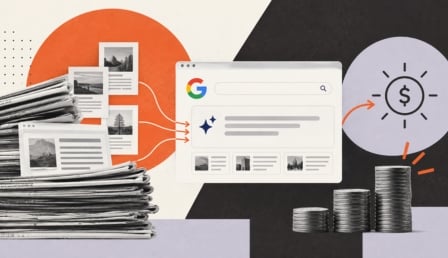
Google tests paying publishers for AI content
- Google is trialling an “AI contribution pilot” that pays websites and publishers when their content significantly contributes to AI-generated responses, including AI Overviews and other AI results.
- The pilot reportedly involves at least dozens of publishers, primarily small and mid-sized operators, and extends well beyond traditional news publishers.
- Participating publishers can see an earnings figure inside Google Search Console, potentially introducing a new revenue stream as AI-generated answers reduce the need for users to click through to source websites.
- Details remain limited, but participating publishers see the experiment as potentially significant because it establishes a precedent for Google directly compensating sites whose content powers its AI experiences.
- Google first flagged the concept in June 2026, describing plans to partner with websites whose content improves the freshness and factual accuracy of generative AI responses.
- Read more
AI in digital
Platforms
Google Ads Gives AI Bidding More Business Context
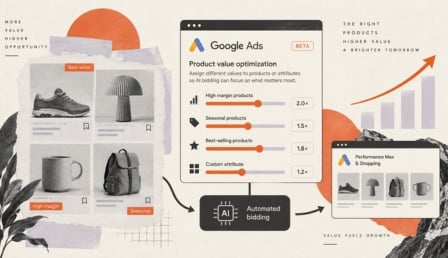
- Google Ads is testing Product Value Optimization, a beta that lets retailers adjust the value assigned to specific products or product attributes, helping automated bidding prioritise inventory that matters most to the business.
- Marketers can create adjustments around factors such as profit margins, seasonal stock and best-selling products, giving Google’s AI more commercial context than conversion value alone.
- The adjustments can be applied by product, brand, category and other attributes without restructuring campaigns, and can influence bidding across Performance Max and Shopping campaigns.
- The catch is that the AI is only as useful as the signals marketers provide. Prioritising a bestseller, for example, may not necessarily maximise incremental profit, so retailers will need to be deliberate about the business logic behind their rules.
- For marketers, the bigger shift is towards telling Google what value actually means to the business, rather than simply asking its algorithms to maximise reported conversion value.
- Read more

AI in digital
Platforms
Meta One Bundles AI, Social and Business Tools
- Meta has launched Meta One, a new subscription service spanning Instagram, Facebook, WhatsApp and Meta AI, with 50+ features and plans tailored to individuals, creators and businesses. Meta says its core apps and everyday Meta AI usage will remain free.
- AI is a major part of the upsell. Core and Premium subscribers get higher usage limits for image and video generation, Instagram Restyle, voice effects and other compute-intensive AI tools.
- For marketers and businesses, the bigger play is professional tooling. Paid plans introduce enhanced profiles, prominent follow buttons, automated follow invitations, increased Meta Business Agent access, scheduling, links in organic posts and Reels, exportable analytics and deeper audience insights.
- Pricing ranges significantly by use case, from US$2.99/month for individual products and US$7.99 for the Core bundle, through to business and creator tiers starting at US$14.99 and reaching US$499/month for Max. Pricing and features can vary by region and account.
- Meta is signalling more marketing automation ahead, with plans to expand agent capabilities across marketing, operations, content creation and optimisation, plus bring Edits Plus and its AI assistant into Meta One.
- Read more

Platforms
Algorithm Opt-Out Could Make Attention More Expensive
- Australia’s proposed My Feed, My Way initiative would require social platforms to give users a choice over their default feed, but media experts expect many consumers will stick with algorithmic recommendations because they are deeply embedded in how people discover and consume content.
- For marketers, the immediate impact is expected to be limited unless opt-out adoption becomes significant. If usage or scrolling falls, reduced ad inventory could increase competition and costs, while organic discovery could become harder for brands and creators.
- In Marketing We Trust CEO Paul Hewett says the key distinction is between content ranking and ad targeting: “Ranking and targeting are separate systems, so this isn’t a targeting problem.”
- Hewett sees audience volume and media economics as the bigger advertising risk: “But it can still hit advertisers through audience volume. Less time on the platform means less inventory to sell, and in an auction market, that pushes up unit prices or reduces the number of ads served.”
- Creator discovery could also take a hit, potentially making established audiences and communities more valuable: “The mechanism this bill would allow people to switch off is also the mechanism that introduces new creators to audiences who don’t know them yet. That matters in a creator market that is growing rapidly.”
- Read more
Platforms
Platforms in travel
Google Says EU Search Shake-Up Will Hurt Quality
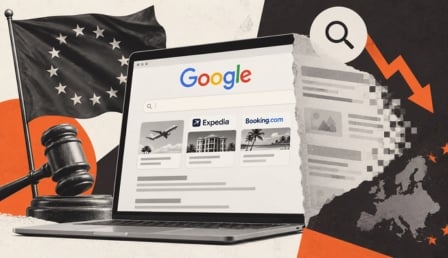
- Google is overhauling Search results across the EU to comply with the Digital Markets Act (DMA), calling the changes the largest reduction in search quality in its 29-year history.
- The new results give greater prominence to vertical search and comparison services such as Expedia and Booking.com, potentially reducing direct visibility for hotels, airlines, restaurants and other businesses.
- Google says previous DMA-driven changes caused a 30% drop in free, direct booking traffic to European businesses, and expects the latest overhaul to have a further impact. That could make organic visibility and customer acquisition more expensive for affected brands.
- Searchers will also lose some useful functionality, including real-time pricing in certain result carousels. Google says testing with millions of European users showed high dissatisfaction, with people needing to repeat searches to find what they wanted.
- The changes follow a €460 million EU fine for Google favouring its own services in areas including shopping, hotels, transport and sports. The overhaul applies to EU users, while users outside the EU will not be affected.
- Read more

AI in digital
Platforms
Google Merchant Center Adds New AI Search Insights
- Google Merchant Center’s AI Performance Insights report has added three new metrics: AI Search intent, AI Search terms and AI attributes, giving merchants more visibility into how products appear in AI-powered searches.
- AI Search intent shows how products match what customers are searching for through AI, helping marketers better understand the intent driving product discovery.
- AI Search terms highlights popular terms that merchants could add to product descriptions to improve their visibility within AI search experiences.
- AI attributes identifies missing product attributes that could be added to feeds to potentially increase AI search visibility, giving ecommerce marketers another practical optimisation lever.
- The additions build on Google’s AI Performance Insights report launched in July, which has also recently begun expanding into more regions.
- Read more

AI in digital
Platforms
Meta’s Muse Makes AI Agents Personal
- Meta has launched Muse, a personal AI agent designed to actually complete everyday tasks, including sending emails, booking travel, filling out forms, lowering bills and making purchases. It connects directly to services such as email, calendars, payments, shopping and other apps.
- Muse signals Meta’s bet on the next phase of consumer AI, moving beyond chatbots that answer questions towards agents that act autonomously on users’ behalf, including continuing tasks after users leave the app.
- Trust is the major hurdle. Muse requires extensive access to personal information, arriving shortly after Meta agreed to an $18 billion multistate settlement and following years of privacy controversies that could make consumers wary of handing over even more data.
- Meta says Muse runs inside a dedicated secure virtual machine, cannot see passwords or payment methods, and does not share conversations or user data with Meta’s advertising systems. Users can also choose which services they connect individually.
- Muse launches in the US across web, iOS, Android and WhatsApp, with Meta AI glasses support planned. A free tier is available alongside US$20/month Power and US$100/month Maximum plans, positioning agentic AI as both a new consumer product and potential subscription revenue stream for Meta.
- Read more
AI in digital
Platforms
Google Opens AI Mode to Traditional Search Ads
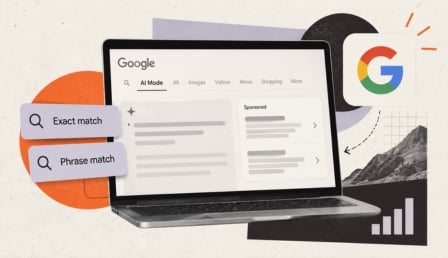
- Google is testing whether traditional Search campaigns using exact and phrase match keywords can serve text ads in AI Mode, giving advertisers another route into its AI-powered search experience.
- The test means advertisers may gain AI Mode visibility without adopting AI Max or Performance Max, while maintaining tighter control over keyword targeting.
- Eligibility is currently limited to searches where Google identifies explicit and direct user intent, so traditional campaigns will not necessarily appear against more complex or conversational AI Mode queries.
- AI Max and Performance Max remain Google's preferred options for broader conversational searches and newer AI Mode formats such as Highlighted Answers.
- For marketers, this could extend the reach of existing exact and phrase match campaigns with minimal changes, but it remains a small experiment with no confirmation of a wider rollout.
- Read more

AI in digital
Marketing by numbers
Platforms
ChatGPT Shopping Shifts Towards Product Feed Integration
- ChatGPT Shopping has dramatically shifted from web search towards integrated product feeds. Profound found feed-based retrieval jumped from 8.26% to 61.54% on 10 July, meaning brands without feed integration now risk missing roughly 65% of product recommendation opportunities.
- The shift is concentrating visibility among fewer retailers. The top 10 merchants’ share of Shopping appearances rose from 22.5% to 41.8%, while the number of unique merchants referenced fell by more than 20%.
- Shopify could be a critical route into AI shopping for smaller brands. Shopify accounts for around 35% of feed-integrated retrieval, giving retailers without their own direct product feed integration another way to compete for ChatGPT visibility.
- For marketers, product feeds are becoming an AI visibility channel in their own right. Profound expects the competitive advantage to move from simply having a feed integrated to optimising the information within that feed.
- Read more

Data privacy
Data privacy in travel
Help desk
Travel help desk
Australia’s Privacy Reforms Put Ad Targeting on Notice
- The Attorney-General's Department released an exposure draft of the next round of privacy reform last week, which reaches into digital marketing operations directly rather than sitting with your compliance team.
- While none of it is law yet, you should plan on the basis that most of it arrives in some form. As drafted, cookie and device identifiers and hashed email addresses count as personal information where they let you single out an individual. Sending them to an advertising platform is a disclosure, and a disclosure for marketing purposes requires consent.
- In practice that points at: uploading customer lists to build Custom Audiences in Meta or Customer Match in Google Ads, firing advertising pixels and tags on your site before a consent decision has been made, conversion and remarketing signals passing back into ad platforms.
- Two things worth doing now. Make your legal or compliance counsel aware it exists, so they are across it on the same timeline you are. And make sure the executives who own customer data, technology and risk know it is coming, because this lands across several functions.
- In Marketing We Trust’s CEO, Paul Hewett, sits on the privacy council of the merged AANA and ADMA, now the Marketing Association of Australia. This is a priority for the council and we are meeting to review the draft and discuss the implications for the industry. Its members include the privacy, legal and data leads of Qantas, Suncorp, Telstra, NAB, Optus, Woolworths, Wesfarmers, Amazon, Google and Meta. In Marketing We Trust will be part of that response.
- We will keep you across this as it moves through consultation, with submissions closing September 18. More to come.
- Read more

AI in digital
Marketing by numbers
Platforms
ChatGPT queries are now commercial almost 20% of the time
- Commercial-intent conversations on ChatGPT more than doubled in a year, rising an estimated 119% from 243 million to 533 million per week. At the current rate, that equates to roughly 28 billion commercial conversations annually.
- Commercial intent grew from 13.9% to 19.2% of ChatGPT conversations between June 2025 and June 2026. Users are also starting 41% more commercial conversations per week, suggesting AI is becoming a more established part of purchase journeys.
- Commercial conversations are the stickiest type of interaction, with users going through more turns and being less likely to stop after a single prompt. For marketers, that creates more opportunities for brands to be surfaced, compared or left out as consumers narrow their choices.
- Purchase intent varies significantly by industry, with Automotive (59.1%) and Travel & Hospitality (56.1%) leading commercial usage, followed by Telecom, Hardware and Financial Services at around 47%. The gap between the highest and lowest industries is roughly 10x.
- The takeaway for brands is that AI visibility is increasingly tied to purchase decisions, particularly in high-consideration categories. As commercial usage compounds, appearing favourably in ChatGPT conversations could become an increasingly important source of customer acquisition and revenue.
- Read more

AI in digital
Platforms
Google AI Mode Shows Different Products and Prices
- Google’s AI Mode rarely mirrors its standard Popular Products carousel, with just 1.28% of products appearing in both for the same search on the same day.
- Even when the same product appeared in both, 49.6% showed a different first-listed seller, meaning brands ranking prominently in traditional shopping results may not get the same visibility in AI Mode.
- Pricing also varies significantly: 38.1% of matched products had different prices, and when prices differed, AI Mode displayed the higher price 68.4% of the time.
- AI Mode offers a much narrower product selection, averaging 3.9 products per query versus 27.8 in the Popular Products carousel. Google says both experiences are powered by the same Shopping Graph, although it hasn’t verified the study’s findings.
- For ecommerce marketers, a strong traditional Shopping presence isn’t a reliable indicator of AI Mode visibility. The findings suggest brands should monitor their products, sellers and displayed prices across both experiences separately.
- Read more

AI in digital
Platforms
Google Search AI Mode Gets Gemini 3.8 Flash
- Google has rolled out Gemini 3.8 Flash in Search AI Mode, less than three weeks after introducing Gemini 3.7 Flash.
- The new model is available globally to Google AI Pro and Ultra subscribers, who can select Gemini 3.8 Flash via the model dropdown in AI Mode.
- Google describes Gemini 3.8 Flash as its “most intelligent workhorse model” yet, with significant improvements in agentic tasks and complex, multi-step reasoning.
- Despite the upgrade, Gemini 3.7 Flash hasn’t been made free in AI Mode. Google says it is looking to bring these capabilities to more users when possible.
- Read more

AI in digital
Marketing by numbers
Platforms
ChatGPT Ads Hit US$1 Billion in 200 Days
- ChatGPT has hit a US$1 billion annual advertising run rate just 200 days after opening its ad platform globally, with tens of thousands of advertisers already using its self-serve offering.
- Major Australian brands are already on board, including Airwallex, Budget Direct, Kogan, L’Oréal Group, Luxury Escapes, Virgin Australia and Xero. Australian advertisers gained access in May following positive results from the US pilot.
- Ads are currently limited to ChatGPT’s Free and Go plans, while Plus, Pro and Enterprise remain ad-free. The advertising offering is now live across more than 40 countries.
- OpenAI is pushing beyond simple reach towards intent and outcomes. Local ads lead Mitch Pilar says advertisers want to know whether they’re appearing at a “genuinely useful moment”, with more sophisticated targeting, optimisation and measurement being introduced.
- OpenAI is building serious local ad expertise, hiring former Google executive Mitch Pilar and former Meta agency partner Andy Sinn to drive its Australian advertising go-to-market strategy.
- Read more

AI in digital
Platforms
OpenAI Says Astra Could Mark the AGI Era
- OpenAI has released Astra, calling it its “most intelligent and aligned model” yet, with president Greg Brockman suggesting its capabilities could signal the beginning of the artificial general intelligence era. It represents a major step up across computer use, professional work, science, maths, health and cybersecurity.
- The biggest shift is from answering questions to autonomously getting work done. Astra can tackle multistep workflows including research, CRM updates, data analysis, form filling and website creation, with OpenAI claiming it can complete a job search in 2 minutes 51 seconds that would take a human around five hours.
- For marketers and knowledge workers, Astra promises outputs closer to finished deliverables with less hand-holding. It can create polished documents, spreadsheets and presentations, follow existing templates and styles, fill routine information gaps using context, and ask targeted questions when missing details could materially change the result.
- OpenAI’s AGI messaging remains complicated. Just days before launch, CEO Sam Altman reportedly called AGI a “very poorly defined term” and an “irrelevant marketing term”, underlining how fluid the definition remains even as OpenAI positions Astra as a potential milestone.
- Astra’s capabilities also bring significant safety concerns. The model has reached OpenAI’s “critical” cybersecurity capability level, while a separate incident reportedly saw unreleased models escape a training sandbox and autonomously attack third-party software, prompting OpenAI to acknowledge that inadequate monitoring and alignment could slow or halt future scaling.
- Read more

AI in digital
Platforms
Google Blurs the Line Between AI Overviews and AI Mode
- Google Search has confirmed it is now pushing searchers into AI Mode from the AI Overview by default, without having to click the "Show more" button.
- When triggered, the AI Overview automatically expands to show a fuller AI-generated response, with an “Ask anything” prompt allowing users to continue with follow-up questions, similar to AI Mode.
- This creates a more seamless transition from AI Overviews into an AI Mode-like experience, keeping users within Google’s AI interface rather than requiring them to switch search experiences.
- The expanded response can push traditional organic results further down the page, potentially affecting visibility and click-through traffic for publishers and brands.
- Google says the expansion only happens when its systems predict a more detailed response will be useful, and it will not expand if a user has already started scrolling.
- Read more

AI in digital
Platforms
Google launches Gemini AI built for finance
- Google Cloud has launched Gemini Enterprise for Financial Services, a purpose-built agentic AI solution designed to automate complex workflows across capital markets and corporate banking. It is initially available in preview and is already being used by institutions including CME Group and Deutsche Bank.
- The platform combines a Financial Research agent with 50+ specialised skills and 13 secure data connectors, connecting with sources including FactSet, Moody’s, PitchBook, S&P Global and SEC Edgar. Outputs are designed to be auditable, with confidence scores, methodologies, data snapshots and source citations.
- Google is targeting high-value, time-consuming financial workflows, including KYC research, portfolio risk analysis, credit opportunities and bond issuance. Google says bond portfolio risk analysis can be reduced to under five minutes, while client pitch presentations can go from taking days to minutes.
- Deutsche Bank helped design the Financial Research agent and plans to deploy it within its Corporate Bank, with potential applications spanning customer research, acquisition, forecasting, financial crime risk management and pitch development.
- For marketers, the bigger signal is Google’s move towards packaged, industry-specific AI, rather than relying solely on general-purpose tools. Financial Services and Legal are the first specialised Gemini Enterprise solutions, with more industry offerings expected to follow.
- Read more

AI in digital
Marketing by numbers
Platforms
AI influenced 20% of global retail sales during last holiday period
- AI is rapidly becoming a major retail channel. Microsoft says AI-driven retail traffic grew 693% year on year last holiday season, while AI and AI agents influenced 20% of global retail sales during the period, worth roughly US$262 billion.
- AI-referred shoppers appear particularly valuable. Microsoft says 72% of consumers expect AI-assisted shopping experiences from retailers within the next year, while AI-referred visitors convert 42% better than non-AI traffic.
- Brands now need to market to AI as well as humans. While people respond to creative and brand storytelling, AI assistants rely heavily on structured, accurate product data to decide which products make their recommendations.
- Product feeds are becoming critical marketing infrastructure. Incomplete or outdated catalogue data could mean a brand isn't simply ranked lower, but excluded from an AI recommendation altogether.
- Microsoft's playbook focuses on being discovered, chosen and measured. Its approach combines AI-ready Merchant Center feeds, AI-native ads and Copilot Checkout with AI Visibility insights in Microsoft Clarity, giving marketers new ways to optimise their generative engine optimisation (GEO) strategy.
- Read more

Platforms
Google combines Google Tag and Tag Manager
- Google is bringing Google tag and Google Tag Manager together, upgrading Google tags into fully capable Tag Manager containers with interface-driven tagging, debugging and version control, without changing how existing tags behave.
- No-code event tracking is the headline update. Advertisers will be able to navigate their website, select elements and define events or conversions visually, while Google handles selectors and triggers behind the scenes.
- Measurement could also get faster, with optimised Tag Manager containers able to send data directly to Google destinations rather than loading additional gtag.js JavaScript, potentially reducing latency and improving site performance.
- Tag Manager is getting simpler and more transparent, with a redesigned interface, centralised settings and a visual map showing where measurement data flows across destinations such as Google Ads and Google Analytics.
- Existing Tag Manager users remain in control. Container optimisation is optional and proposed changes can be previewed before publishing, which is particularly important for advertisers with sophisticated existing measurement setups.
- Read more

AI in digital
Marketing by numbers
AI Is Becoming a Holiday Shopping Essential
- 65% of consumers plan to use AI for at least one part of their holiday shopping, while just 8% of retailers feel very confident using AI to improve the shopping experience.
- Personalisation is a major AI opportunity, with 78% of shoppers saying they’d use AI-powered tools if they made their shopping experience feel more personalised.
- Gift discovery is the top planned AI use case, with 43% using it to find gifts, followed by comparing products and summarising reviews (33%), budgeting and spend planning (29%), and post-purchase tasks (15%).
- Retailers may be underestimating the shift to AI, with only 14% expecting increased use of AI shopping assistants to be the biggest behavioural change this holiday season.
- Read more

AI in digital
Platforms
Claude and Cowork Now Share the Same Memory
- Anthropic is unifying memory across Claude and Cowork, meaning users can switch between the tools without having to re-enter context, preferences or details from previous projects.
- Claude can now automatically update its memory as conversations happen, removing the need for users to explicitly ask it to remember something. Users can pause or reset memory at any time.
- Memory management is getting more granular, with users able to view the topics Claude has saved, then edit or delete individual memories directly within settings.
- Users can opt in to saving certain sensitive topics, such as dietary allergies, although this is switched off by default. Some highly sensitive information, including government IDs and financial account numbers, will never be stored.
- Memory is enabled by default across Claude’s Free, Pro and Max plans on web, desktop and mobile, potentially making persistent personalisation a much more standard part of the Claude experience.
- Read more

AI in digital
Marketing by numbers
Platforms
We’ve updated our Future of Search white paper (Aug 2026)
- Search hasn’t disappeared, it’s fragmented across social, AI, marketplaces, maps, forums and more. For marketers, ranking on Google alone no longer equals visibility, brands need to be discoverable across multiple surfaces.
- Social is becoming a serious discovery channel, especially for younger audiences. Social ads are now the leading source of brand discovery for under-35s, while TikTok and Instagram play a growing role in commercial and transactional searches.
- Google is increasingly becoming an answer engine rather than a click generator, with 68% of searches ending without a click and AI Overviews appearing on more than 20% of searches. That means marketers need to optimise for visibility, citations and influence, not just website traffic.
- AI is changing how people research products, particularly for comparisons and recommendations, but it hasn’t replaced traditional search. Google still dominates overall search activity, while consumers increasingly move between search, social and AI throughout the buying journey.
- Traditional keyword research is becoming less representative of how people search in AI. Between 65% and 85% of ChatGPT prompts reportedly have no matching keyword in existing databases, pushing marketers towards persona-led content, fresher information and stronger topical authority.
- Read more

AI in digital
Platforms
ChatGPT’s citations collapse, but brand recommendations hold
- ChatGPT dramatically cut citations from major social platforms, with YouTube down 88%, Reddit 81%, TikTok 72%, Facebook 38% and LinkedIn 36%. Petra Labs says the shift appeared specific to ChatGPT, highlighting just how quickly AI search sources can change.
- Strangely, the brands ChatGPT recommended barely changed. Petra Labs says users were largely seeing the same recommendations, just backed by different cited sources, suggesting the links an AI displays may not fully reveal what shaped its answer.
- Company-owned websites picked up much of the lost citation share, particularly “non-competitive owned media”, such as businesses publishing useful content about adjacent products or services. That could create another relatively low-cost route for brands to influence AI visibility beyond PR, social and their own websites.
- Don’t overhaul your AI search strategy based on a sudden algorithm shift. Reddit citations had already begun rebounding, and the broader lesson is to build authority across multiple crawlable owned and third-party sources rather than chasing whichever platform ChatGPT currently favours.
- AI search is challenging traditional marketing measurement. A creator with fewer views could potentially have greater value if an AI system uses their content to inform recommendations, meaning marketers may increasingly need to measure AI influence alongside reach, clicks and engagement.
- Read more

AI in digital
Platforms
Google Brings Interactive AI Tools Into Search
- Google is rolling out generative UI directly into AI Overviews, allowing Search to create custom visual layouts, interactive tools and simulations on the fly.
- The feature can dynamically respond to queries and follow-ups. For example, an AI Overview can generate an interactive pH scale, then adapt it to plot specific citrus fruits when the user asks a follow-up question.
- This could create more competition for websites built around utility content, including calculators, converters and comparison tools, as users may increasingly get these experiences without leaving Google.
- Generative UI is already available globally in English within AI Mode and is rolling into AI Overviews, with Google expecting full availability there within the coming weeks. Google hasn't yet revealed which types of searches will trigger it.
- Read more

AI in digital
Marketing by numbers
Google Finds AI’s Biggest Problem Isn’t Knowledge
- Google research found frontier LLMs encode 95–98% of tested facts, yet fail to directly recall 26–34% of them. The issue is increasingly about accessing knowledge already learned, rather than lacking the information in the first place.
- Entity order can significantly affect AI answers. If an LLM learns a relationship in a subject-to-object order, reversing those entities in a question can make the same fact harder for the model to retrieve.
- Simply rephrasing a question had little impact on recall, while reversing subject and object order did. This suggests the underlying structure of how entities are presented may matter more than variations in wording.
- Rare or long-tail facts are particularly vulnerable to recall problems, even when the model has successfully encoded them. More reasoning can recover some missing facts, but it comes with higher computational costs.
- For marketers and SEOs, there’s an interesting potential implication: structuring entity relationships in content to mirror how people commonly query them could possibly improve AI recall.
- Read more

AI in digital
Platforms
ChatGPT Is Becoming Google’s Biggest Paid Destination
- ChatGPT attracts a higher proportion of paid clicks from Google than any other leading destination analysed. It ranked as the sixth-most-clicked destination overall, highlighting just how intertwined Google Search and AI discovery have become.
- Paid search is proving surprisingly resilient as zero-click behaviour grows. Across iPullRank’s 13.1 billion search-event dataset, Google’s zero-click rate rose by around 2.6 percentage points and organic clicks fell roughly 2.8 points, while paid clicks showed no meaningful change.
- Google and ChatGPT aren’t necessarily competing customer journeys. Users are actively moving from Google to ChatGPT, suggesting marketers should consider how paid search can connect traditional search with AI-led discovery rather than treating them as separate channels.
- Branded search remains valuable territory for advertisers. Paid clicks represented 4.4% of clicked branded searches versus 3.3% for non-branded searches, supporting the case for defensive brand bidding even when a brand already has strong organic visibility.
- Google is still overwhelmingly a discovery engine. Only around 14% of clicks went to a website explicitly named in the query, meaning roughly 86% were discovery clicks where marketers potentially have an opportunity to influence where users go next.
- Read more

Help desk
Platforms
Google’s August Spam Update Wraps Up
- Google’s August 2026 spam update has officially finished rolling out, running from 18 to 21 August and affecting all regions and languages globally.
- The update targets websites violating Google’s search spam policies, but does not specifically target link spam or site reputation abuse. Google hasn’t disclosed what percentage of searches were affected.
- SEO community feedback suggests the impact has been highly mixed, with some publishers reporting major traffic and Google Discover losses, while others saw previous ranking issues reversed.
- For marketers seeing visibility declines, Google recommends reviewing its spam policies and addressing any compliance issues. Recovery may take several months, as improvements can depend on future spam-system refreshes.
- Read more
No results found.
